Looking at land in Elma Center can feel exciting right up until the questions start. Can you add a barn later? Is livestock allowed? Will a well, septic system, or old outbuilding create surprise costs after closing? If you are shopping for a property with acreage, this guide will help you understand the local rules that matter most so you can buy with more confidence. Let’s dive in.
Why zoning matters in Elma Center
In the Town of Elma, zoning is not a small detail. The town code divides the municipality into eight zoning classes, including Residential A, Residential B, Residential C and Agricultural, several commercial districts, an Industrial Zone, and an Elma Center Overlay.
That means two properties that look similar on a tour may not allow the same uses. Before you assume you can keep animals, add a barn, or expand an outbuilding, you need to confirm the parcel’s exact zoning district on the official town zoning map.
Another important point is how Elma defines an accessory building. The code includes structures such as a barn, stable, playhouse, or greenhouse when the building is subordinate to a main building on the same lot.
That definition can affect what is allowed and how setbacks apply. In other words, a barn is not automatically treated the same way in every situation just because the property feels rural.
Residential C and Agricultural basics
For many land buyers, the most relevant district is the Residential C and Agricultural Zone. This district allows a private residence for up to two families, along with uses such as a farm building, greenhouse, library, church, school, park, or playground.
The same section of code also lists uses that are not allowed unless specifically permitted elsewhere. Those include taverns, clubs, trailer camps, airports, and industry or commercial use.
If you are comparing vacant land or larger residential parcels, the lot standards in this district are worth checking early. The code calls for a minimum of 100 feet of frontage, 250 feet of depth, and 32,000 square feet of lot area.
Standard setbacks also matter when you start picturing where a house, garage, or barn could go. In this zone, the basic setback standards are 50 feet from the road line, 20 feet from side lines, and 10 feet from rear lines.
Barns and outbuildings to verify
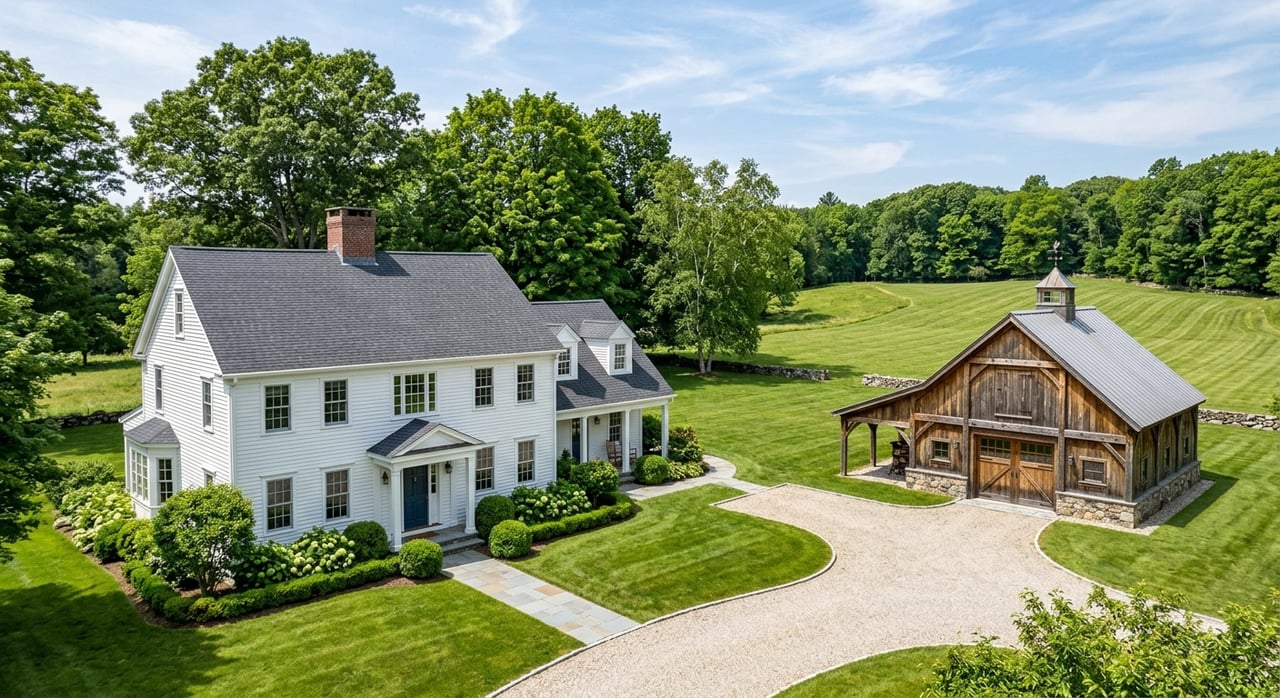
If a property has an existing barn or you plan to build one, do not stop at the listing description. In Elma, barns and similar structures are zoning issues first, and the exact use of the building can change the rules.
For example, the setback rules are different for animal housing and for other accessory buildings. In the Residential C and Agricultural Zone, buildings housing animals must be at least 75 feet from the road line and 25 feet from side and rear lines.
Other accessory buildings generally must be set back 75 feet from the road line and 10 feet from side and rear lines. Those numbers can shape whether a lot truly works for your goals, especially if the parcel is narrower than it appears in photos.
The code also allows agricultural accessory uses such as truck gardening, dairy, nursery or greenhouse activities, livestock housing, farm equipment storage, crops or supplies, cider making, and cold storage of farm produce. Structures used for those purposes must be at least 75 feet from a public road line and 25 feet from any other property line.
Horses, livestock, and special-use approvals
Many buyers are drawn to Elma Center for open space and flexibility. Still, if your plans include horses, livestock, or another specialized rural use, it is smart to verify the approval path before you close.
Some uses require more than standard zoning compliance. The town code says riding or boarding stables, kennels, and fur farms require written unanimous consent from all property owners within a 1,000-foot radius of the lot, with filing through the Zoning Board of Appeals.
That is a major detail for buyers who hope to use a property for equestrian or boarding purposes. A parcel may look perfect on paper, but the approval process can be more involved than expected.
Building permits and timing rules
Elma’s permit rules are another reason to do your homework before buying land or a home with detached structures. The town requires a building permit before erecting, constructing, or altering a building or structure, subject to the code’s agricultural-building provisions.
The application process calls for practical details such as the nature of the project, the size and location of the property and building, and any deed restrictions. Before a permit is issued, the code also requires a driveway culvert, the building to be staked out, and a certified survey.
This is one reason buyers should ask for documents early. If you are considering changes after closing, it helps to review the survey, permit history, and any recorded deed restrictions before you commit.
There is also a sequencing rule that surprises many land buyers. For ordinary accessory structures, no building permit may be issued until the main structure is 50% completed.
If you are buying a vacant lot and hoping to build the barn, workshop, or detached garage first, that timing rule could affect your plan. It is much better to know that before you finalize your purchase.
Road frontage and access questions
Road access is not just a convenience issue in Elma. The town code says no building permit may be issued on a lot that does not have the required frontage on a road accepted by the Town and included on the zoning map.
That makes frontage and access something to verify at the start of your search, not at the end. A parcel with appealing acreage may still need a closer look if your future plans depend on new construction.
Wells and septic before closing
If the property uses an onsite wastewater treatment system and or a private water supply well, Erie County requires a Property Transfer Certification before transfer of title for properties intended for human occupancy. This applies to residential and commercial properties.
If the transfer cannot be inspected before closing, or if the property has been vacant for more than 90 days, a variance may be required. For buyers, that means well and septic questions should be part of your early due diligence, not an afterthought.
The county lists current property-transfer fees as $300 for a septic system with public water and $496 for a property with both septic and a private drinking water well. If the home has a dug or excavated well, the county says inspection must be completed by a New York State Department of Environmental Conservation registered well driller.
Private wells are also sampled for bacteriological quality as part of the process. For new or replacement systems, Erie County says final approval will not be issued until the well completion report and a negative bacteriological result are received.
Well and septic siting basics
If you are planning future improvements, basic well and septic spacing matters too. Erie County says a private well should be at least 50 feet from septic tanks.
In general, a well deeper than 50 feet and not in coarse gravel should be at least 100 feet from the leaching area or sand filter. These are the kinds of site-planning details that can affect where a house addition, replacement system, or future outbuilding makes sense.
Agricultural districts and buyer expectations
Agricultural district status is separate from zoning, and that distinction matters. Erie County explains that agricultural districts are designed to protect and promote farmland, and they are reviewed every eight years, with an annual open enrollment period in Erie County from September 1 to September 30.
District membership alone does not automatically change taxes or restrict what a landowner can do. Buyers still need to follow the municipality’s zoning code and other regulations.
Agricultural districts may include active farms, idle land, forested land, and even residential or commercial parcels. So if a property is in an agricultural district, that is a useful fact to understand, but it does not replace parcel-specific zoning review.
Right-to-farm realities in Erie County
One of the most important expectation-setting issues for buyers is Erie County’s right-to-farm disclosure. Residential real estate contracts in the county require notice that nearby farming activity may involve noise, dust, fumes, odors, smoke, insects, machinery at any hour, animal waste, fertilizers, and pesticides.
For some buyers, that sounds like part of the appeal of a semi-rural setting. For others, it is a reminder that open views and farmland often come with real day-to-day activity nearby.
Neither reaction is right or wrong. The key is making sure the setting matches your comfort level and your long-term plans.
A smart buyer checklist for Elma Center land
Before you move forward on a property with land, barns, or outbuildings, keep this checklist handy:
- Confirm the parcel’s zoning district on the Town of Elma zoning map.
- Verify that your intended use is allowed in that district.
- Ask whether the property is in an Erie County agricultural district.
- Request the survey, permit history, and any deed restrictions.
- Measure likely building areas against setback rules for homes, accessory buildings, and animal housing.
- Confirm whether the property has public water and sewer or a private well and septic system.
- Make sure you understand the Erie County property-transfer certification process before closing.
- If you want horses, livestock, a kennel, or another specialized use, verify whether town approvals or county health review may apply.
- Read the right-to-farm disclosure with the expectation that normal agricultural impacts may occur nearby.
How local guidance can help
Buying a property with land is different from buying a typical suburban lot. You are not just evaluating the house. You are also evaluating zoning, setbacks, access, permit timing, utility systems, and whether your future plans fit the parcel.
That is why local, property-specific guidance matters. When you know the right questions to ask before closing, you can avoid expensive surprises and focus on finding a property that truly fits the way you want to live.
If you are considering a home or land purchase in Elma Center or another Western New York suburb, Karen Baker can help you evaluate the property details that matter and guide you through your next move with clear, responsive support.
FAQs
What zoning should buyers check for land in Elma Center?
- Buyers should confirm the parcel’s exact zoning district on the Town of Elma zoning map, since allowed uses and setback rules can vary by district.
What are the lot requirements in Elma’s Residential C and Agricultural Zone?
- In that zone, the code lists a minimum of 100 feet of frontage, 250 feet of depth, and 32,000 square feet of lot area.
What setbacks apply to animal barns in Elma?
- In the Residential C and Agricultural Zone, buildings housing animals must be set back at least 75 feet from the road line and 25 feet from side and rear lines.
Can buyers build an accessory structure first on a vacant lot in Elma?
- For ordinary accessory structures, the town code says a permit is not issued until the main structure is at least 50% completed.
What should buyers ask for before closing on an Elma property with land?
- Buyers should request the survey, permit history, and any deed restrictions, and should verify zoning, frontage, access, and utility details.
What well and septic rule should buyers know in Erie County?
- Erie County requires a Property Transfer Certification before title transfer for properties intended for human occupancy that are served by onsite wastewater treatment and or a private well.
What does agricultural district status mean for buyers in Erie County?
- Agricultural district status is separate from zoning and does not automatically change taxes or replace the need to follow town code and other regulations.
What does the Erie County right-to-farm disclosure warn buyers about?
- The disclosure warns that nearby agricultural activity may involve noise, dust, fumes, odors, smoke, insects, machinery at any hour, animal waste, fertilizers, and pesticides.